

 TH
THRisk Management
Risk Management Approach
NSL Foods Public Company Limited and its subsidiaries recognize the importance of risk management at all levels of the organization to strengthen business resilience and support sustainable growth amid a rapidly changing operating environment.
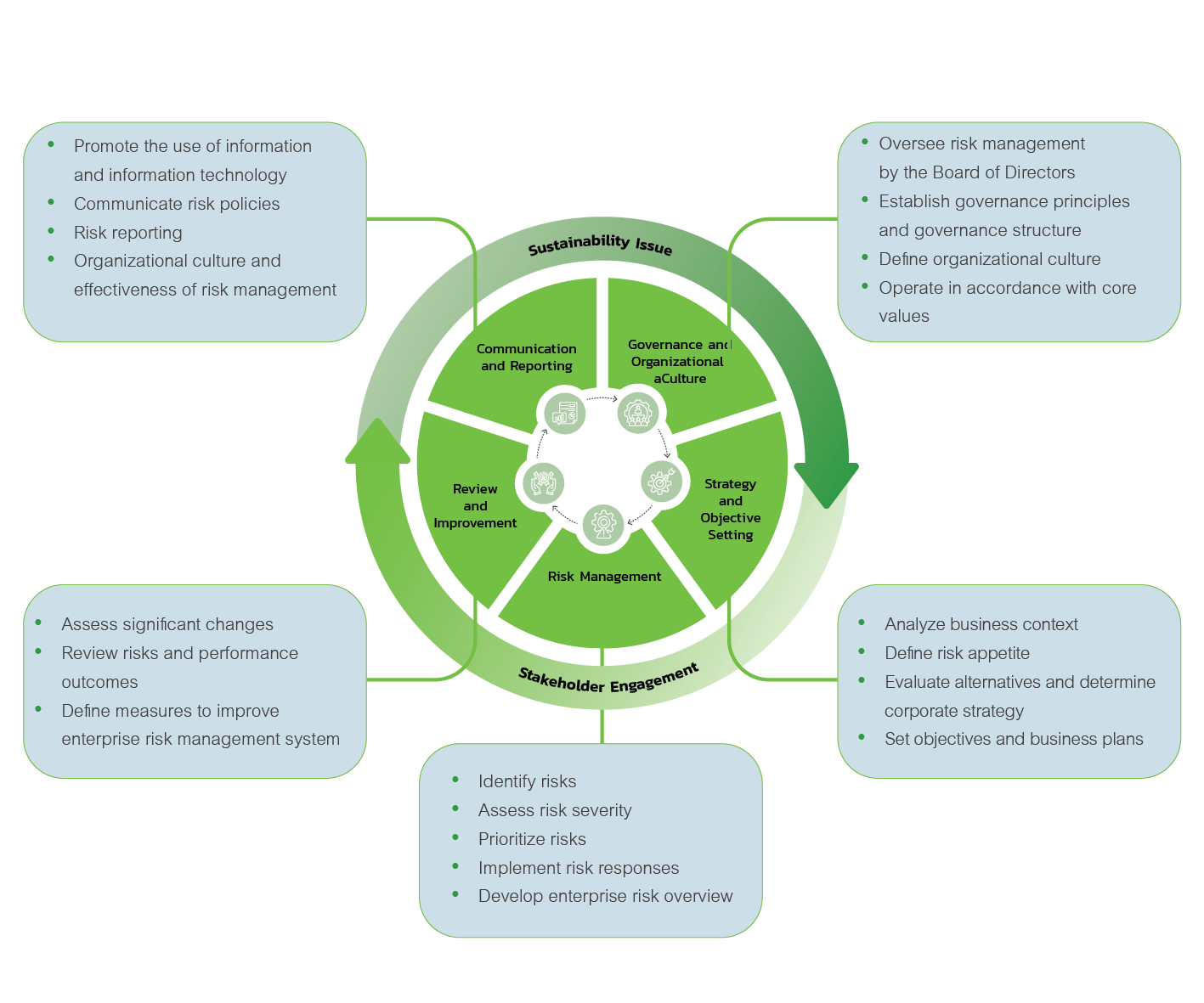
The Company has established an enterprise-wide risk management framework and processes covering all relevant business activities. The risk management structure is regularly reviewed to ensure that the roles, duties, and responsibilities of relevant functions are clearly defined.
The Company also continuously promotes communication, risk awareness, and risk management training among relevant functions to embed risk management into day-to-day operations and organizational decision-making, thereby enhancing the effectiveness of risk identification, assessment, response, and oversight.
Risk Governance Structure
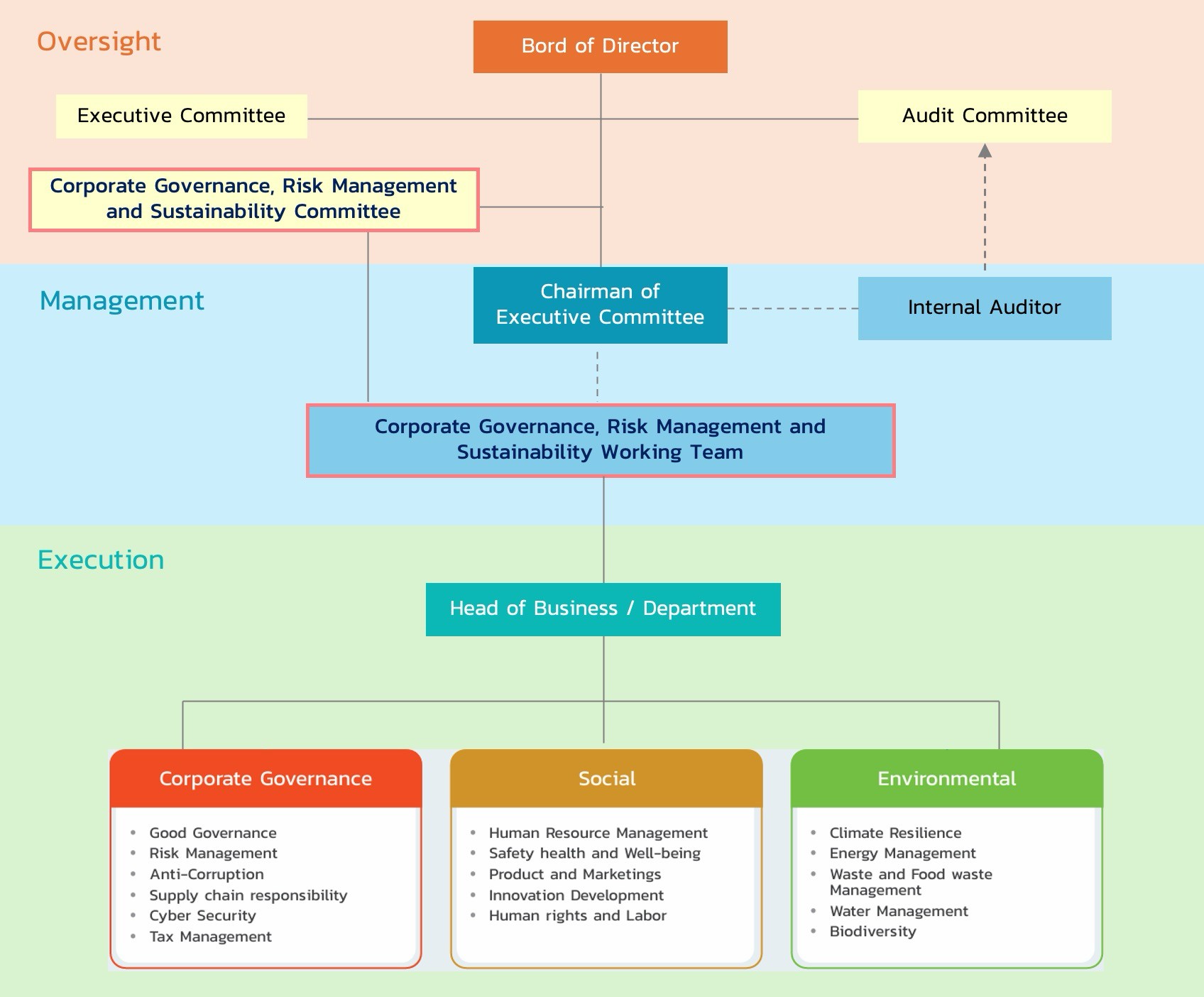
The Company oversees and manages risks through the Corporate Governance, Risk Management and Sustainable Development Committee (CGRSD Committee), which is responsible for establishing the risk management framework, policies, and relevant measures, as well as providing guidance and reviewing the effectiveness of internal controls to ensure compliance with corporate policies and applicable regulatory requirements.
The Corporate Governance, Risk Management and Sustainable Development Management Team (CGRS Working Team) is responsible for identifying, assessing, and managing risks; implementing risk control measures; monitoring Key Risk Indicators (KRIs); and reporting progress on risk management activities to the CGRDS Committee in accordance with the established reporting schedule.
In addition, the Internal Audit function, which operates independently, is responsible for providing objective assurance regarding the effectiveness of the Company’s governance and enterprise risk management systems.
Risk Analysis and Risk Management Approach
The Company conducts enterprise risk assessments in accordance with the COSO Enterprise Risk Management (COSO ERM) framework, an internationally recognized risk management framework. This approach enables the Company to systematically and effectively identify, assess, respond to, and monitor risks across its business value chain.
Risk management is integrated into the Company’s operations, strategic planning, and decision-making processes to strengthen its ability to respond to uncertainties and support long-term sustainable growth.
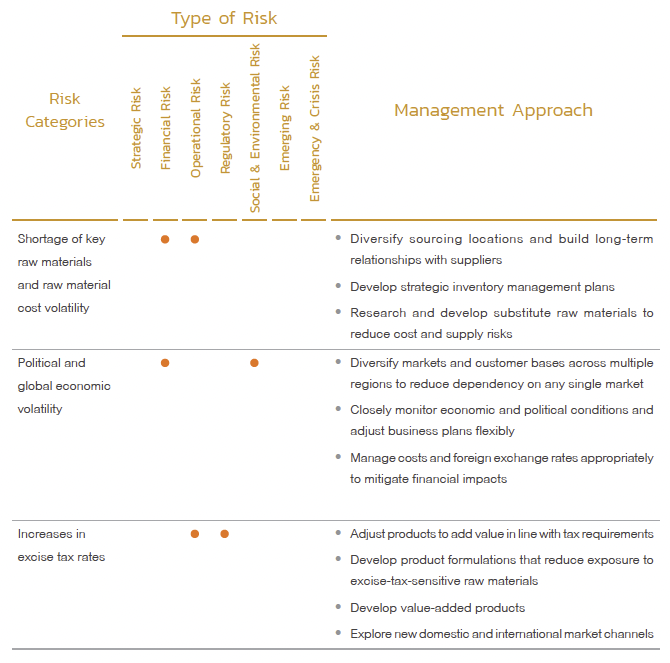
The Company classifies its enterprise risks into seven principal categories:
- Strategic Risk
- Financial and Accounting Risk
- Operational Risk
- Compliance Risk
- Social and Environmental Risk
- Emerging Risk
- Emergency and Crisis Risk
The Company assesses its risks and integrates material risk issues into the enterprise risk management system. The results are used to determine appropriate risk management measures and support systematic and continuous monitoring and review processes. This enables the Company to strengthen its preparedness and respond appropriately to risk factors that may affect business operations.
Through this assessment process, the Company identified three key emerging risk issues, together with their respective risk management approaches, as follows.
Emerging Risk Assessment
To strengthen preparedness for ESG-related events and circumstances that could have a significant impact on business operations, the Company conducts Emerging Risk Identification and assesses potential impacts on the organization arising from both domestic and international factors.
The Company continuously monitors emerging trends and risk issues using a variety of information sources, including the World Economic Forum’s Annual Global Risks Report, to support the analysis and assessment of risks that could affect future business operations.
The Company also conducts Scenario Planning under different assumptions to enhance organizational preparedness and strengthen its ability to respond to uncertainty and potential changes in the operating environment.
Through this process, the Company has identified and assessed the following key emerging risks:
1. Extreme Climate Events

Potential Impacts :
Extreme climate events may disrupt supply chain continuity, potentially resulting in shortages of critical raw materials and higher logistics costs. Such events may also cause damage to the Company’s assets and infrastructure and disrupt production processes.
Risk Management Approach :
The Company diversifies its raw material sourcing to reduce dependence on any single source. It also develops and regularly reviews its Business Continuity Plan and Business Continuity Management (BCP/BCM) framework to ensure adequate coverage of disaster scenarios.
In addition, the Company continuously monitors weather information and climate-related trends and improves its infrastructure and operational processes to enhance resilience and appropriately manage physical risks arising from climate change.
2. Adverse Outcomes of AI Technologies

Potential Impacts :
The adoption of Artificial Intelligence (AI) technologies in business operations may create risks related to data accuracy and reliability, inaccurate decision-making resulting from inappropriate data or outputs, as well as privacy and data protection risks.
Such risks could adversely affect operational efficiency, stakeholder confidence, and the Company’s reputation.
Risk Management Approach :
The Company applies AI Governance and Data Ethics principles to ensure that AI technologies are deployed appropriately, transparently, and responsibly.
The Company strengthens cybersecurity measures, access controls, and data protection mechanisms while developing employees’ knowledge and skills to use AI technologies effectively and with an appropriate understanding of the associated risks.
The Company has also obtained certification under the ISO/IEC 27001 Information Security Management System standard.
3. Geoeconomic Events

Potential Impacts :
Geopolitical and global economic uncertainty may contribute to volatility in raw material and energy costs, as well as risks arising from fluctuations in foreign exchange rates, changes in trade measures, and customs tariffs.
These factors may affect the Company’s operating costs, competitiveness, export activities, and ability to expand into international markets.
Risk Management Approach :
The Company diversifies its markets, sourcing channels, and business partners to reduce dependence on any particular country or counterparty.
The Company also manages foreign exchange and cost-related risks as appropriate and closely monitors and analyzes economic and geopolitical developments, trade measures, and changes in international regulations.
This enables the Company to assess potential impacts and adjust its business plans in a timely manner.
 About NSL
 Our Business
 Products
 Investor Relations
 Corporate Governance
 Sustainability
 Careers
 News
News